Traditional staff notation uses a range of different note symbols to show how long each note lasts. Not only does the musician working from traditional notation need to learn and become adept at quickly deciphering and interpreting these various symbols, they also need to learn to string them all together to produce the corresponding rhythms. Typically a “count chant” method (like the “one e and a” approach above) is used to try to distil out, in a very mathematical way, when each note should occur, based on all the note and rest durations coming before it in the measure. While this works, it can be a real challenge to figure out, and is very much based on theory and notation, rather than on the musical sounds themselves. This particularly limits its usefulness for creative purposes like improvising and composing.
In the next chapter we’ll introduce an alternative to “count chant”, called “rhythm syllables”, which is a sound-based approach. There is also an alternative to the traditional staff notation, which makes very clear the relationship between notes and the underlying Beat. This avoids the need to “figure out” when each note occurs in the measure: you can see it directly.
Not only is this alternative approach much easier to understand and brings the big advantage of keeping us clearly grounded in the underlying pulse, it actually isn’t a strict alternative at all. In fact, it becomes easy to transform this notation into the corresponding traditional staff notation, making it a kind of powerful shorthand.
This form of notation comes from the Kodály approach See Chapter 9: Solfa for background. and is called “Stick Notation”, because rather than drawing a (sometimes very intricate!) note symbol, we use simple lines, and our simplest building block of a quarter note is one vertical line, looking like a stick:
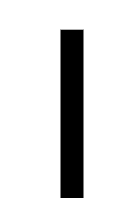
Stick Notation goes hand-in-hand with Beat Blanks. Here is how we could write a series of four notes, each lasting one beat (i.e. quarter notes) in Stick Notation on Beat Blanks:

If we have more than one note per beat, there are other simple Stick Notation symbols we can use:

We’ll explore these much more in the following chapter on Rhythm! But as an example, here is how we could write the earlier exercise where we spoke e.g. “one and two and three and four”, clapping once per word: