


One of my favourite interviews for the Musicality Now podcast was with Dr. Melody Payne, a piano teacher and widely-respected expert in piano pedagogy, who shared the following story relating to helping students start playing more expressively.
She had found that her young beginner students were so absorbed in “getting the notes right” that their playing would often come out boring and mechanical. She knew how much they loved music, and how expressive the children were in their daily lives as they talked and played. But when it came to playing piano, they would sit with furrowed brows in deep concentration, plunking out one note at a time without an ounce of musicality.
She was looking for some way to bring out expression in their playing, and finally hit on one simple instruction: as they approached the end of their piece, she asked them to slow down and play more softly.
This instruction was easy for them to follow, and the effects were immediate. Suddenly, the students were engaged with the new expressiveness of their music. At the recital, their parents were so moved by the performances that many were wiping away tears. Even the very youngest beginner had connected with the audience through their command of musical expression.
This is a testament to the “Outside → In” power of the musical language of emotions. When we apply expressive actions, like slowing down and getting softer, we give our feelings someplace to go, and suddenly both performer and listener feel a deeper emotional connection with the music.
Changes in the volume of music, the softness and loudness, are referred to as dynamics. The word implies change in its very definition, as “force producing motion”.
The Western music notation system has devised a number of symbols and terms to describe volume:
| Symbol | Term | Meaning |
|---|---|---|
| fff | fortississimo | Very, very loud |
| ff | fortissimo | Very loud |
| f | forte | Loud |
| mf | mezzo forte | A little loud |
| mp | mezzo piano | A little soft |
| p | piano | Soft |
| pp | pianissimo | Very soft |
| ppp | pianississimo | Very, very soft |
And then another set of symbols and terms that describe changes in volume:
| Symbol | Term | Meaning |
|---|---|---|
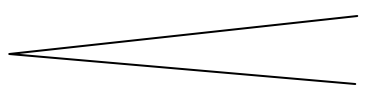 |
crescendo | Gradually getting louder |
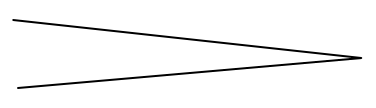 |
decrescendo or diminuendo | Gradually getting quieter |
| sfz | sforzando | A sudden emphasis (loud then quiet) |
Dynamics in Different Styles
Classical music and instrumental movie scores are well-known for expressive dynamic shifts. Ravel’s Bolero combines changes in timbre with one massive 15-minute long crescendo on the same repeated melody to great expressive effect. Usually though, the dynamic changes come quicker.
Much of today’s popular music has been shaped by the need to stand out on the radio, with the overall volume compressed to stay at a relatively constant level throughout the song.
Popular music producers however can still give the illusion of volume changes by changing timbres and instrumentation from section to section. For example, we tend to associate more busy or distorted timbres as “louder” and clear or acoustic timbres as “softer”. They also make great use of audio mixing, letting different instruments be heard as louder and softer in the overall sound.
Exploring The Dynamics Of A Note
The above examples illustrate the dynamics created with a large number of musical sources, either in an orchestra or in the recording studio, but the impact of dynamics can be felt in a single instrument expressing a melody—or even a single note.
The type of dynamic indications listed above, like we might find in a classical music score, are but broad guidelines in comparison with the infinite and detailed dynamic possibilities. Indeed, every single note of a melody can be shaped with dynamics, both relative to the notes around it and through the duration of that note. We can call that constant, detailed, expressive use of dynamics “microdynamics”.
One clear example of the impact such microdynamics can have is in establishing the Meter of a piece, as covered in Chapter 5: Active Listening and Chapter 12: The Beat. If you were to play an even, steady pulse on a snare drum, with every drum hit at the exact same volume, a listener would have no sense of the meter or how beats were grouped. But if you instead emphasised certain notes by playing them louder (e.g. LOUD quiet quiet quiet, LOUD quiet quiet quiet) suddenly the meter becomes clear and the music is perceived as grouped into measures.
Let’s explore the dynamics of a single note.
EXERCISE: Exploring The Dynamics Of A NoteSelect a note on your instrument.
Inside → Out: Based on what you’ve discovered, what different emotions, feelings, or energies can you now create intentionally, through your dynamic choices? |
Using Dynamics to Shape a Phrase
Now that we’ve calibrated our volume control a bit, let’s try exploring the dynamic possibilities across a phrase.
EXERCISE: Using Dynamics to Shape a PhraseSelect a phrase from a piece you play (or if you prefer, improvise a phrase to work with).
Inside → Out: Based on what you’ve discovered, try to express different emotions, or simply different levels of energy by your choice of Dynamics. |
As you do this exercise, really pay attention to the interplay between Pitch, Rhythm, and Dynamics. While the Pitch and Rhythm are remaining constant with each play-through, what impact do your dynamic choices have? How does the emotion of the phrase seem to be affected by your use of Dynamics?